|
The architectural design of Bing Walker’s home in Llandudno reflects his
meticulous precision and signature quest for perfection. With fifty years in the
industry which started as an engineering graduate from the University of Cape
Town (UCT), one of the first projects that Bing undertook was the design and
construction of his massive five storey home, which is considered a structural
masterpiece.
|
It was also Bing’s engineering qualification which paved the way to a series of
further intricate projects which called on his vast expertise across all
disciplines. “When I studied civil engineering at UCT, the qualification covered
a broad spectrum which ranged across the architectural, structural and
mechanical engineering disciplines. The interrelatedness of the course also
allowed us to appreciate the architecture of building systems within its overall
building design.”
“There were not as many civil engineering consulting firms in the 1950’s as
building contracting firms and these specialized in the planning, designing and
oversight of a building's construction from start to finish,” explains Bing,
recalling the early years.
Bing acquired his Llandudno property in 1960 and set about to design the first
three stories, drawing inspiration from a bridge model. An unfortunate
electrical fault in 1994 led to a fire and the house subsequently burnt to the
ground. “We were at a sixtieth birthday party on the beach when someone spotted a house on
fire in the distance. It was with horror that I realized that it was my home but
it was too late to save anything by the time the authorities arrived,” he
explains.
Bing is however quick to point out the silver lining in his story, and proudly
shows off his handiwork in the fourth and fifth floors which were later added to
the original design. “The re-design and construction of the house allowed me to
increase the living space to accommodate my entire family when they come for a
visit. I now have a suite for
myself and my wife, a suite for my daughter and her husband, one for my son, a
level for all the kids and a sun filled office on the top floor.”
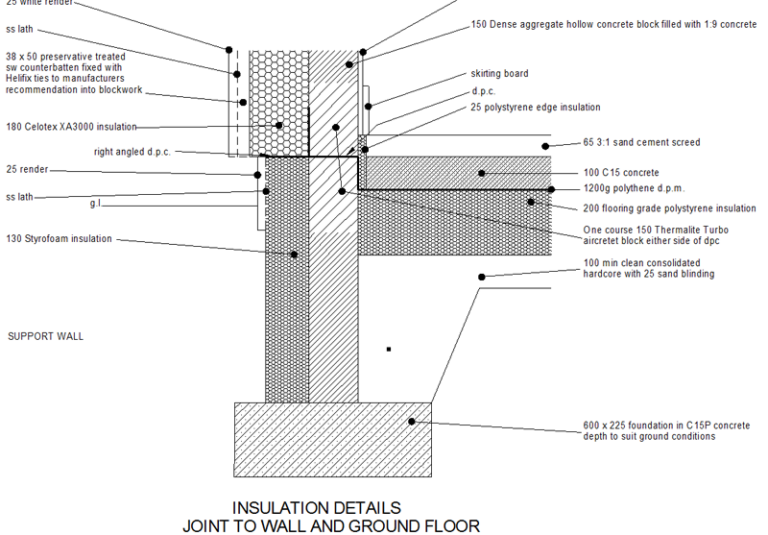
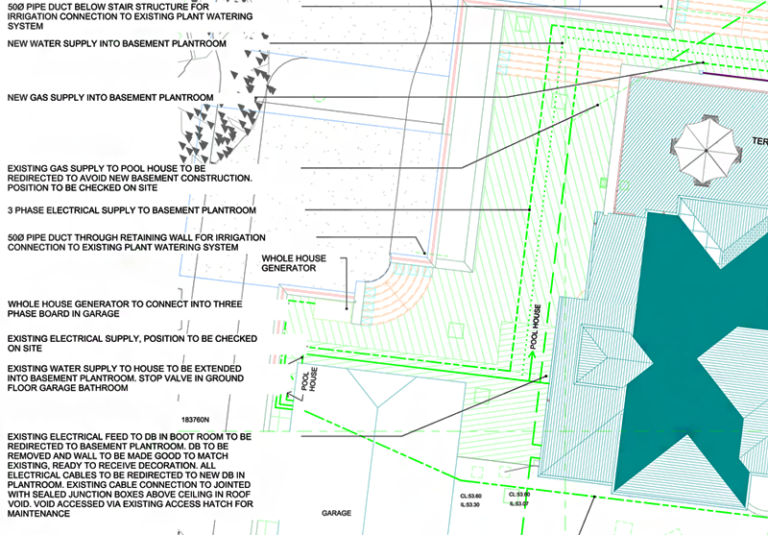
Most of Bing’s designs are constructed using AllyCAD, a program which he has
nothing but high praise for. “The software is so easy to use and even easier to
learn. I basically taught myself how to use the software and was able to produce
high level designs in no time. Although I design a large amount of architectural
and structural plans I have also been able to put the software to good use when
planning civil infrastructure,” he explains.
An interesting design which dates back as far as 1975 and which resurfaced
nearly 35 years later is the Trans Caprivi Highway, Okavango River Bridge. “I
was happy to be involved in this project as it resulted in the establishment of
the first incremental launch bridge, completely unique to Africa. It was
therefore a good surprise after working on the construction of the original
bridge in 1975 to be involved in the design of the widening for the structure to
accommodate two lane traffic flow for vehicles in 2008."
|
|
"The current design for the Okavango River Bridge also involved a cross section
through to the existing bridge to accommodate the bridge lengthening. The
project, which is currently at tender phase would entail the design of a
structure around the existing 150 metre bridge so that labourers could work inside the unit during the
construction of a further 34 metres,” explains Bing with delight.
Bing has been able to diversity his skill set and consults on a regular basis to
the built environment on new methods and techniques. His love and appreciation
for fine architectural designs, solid and durable structures and precision
perfect input has led him to become a household name in the industry. As to the
thought of retirement Bing is adamant: “For the next 10 years I don’t plan to
slow down at all. I’ve always liked what I do and over the years it has also
become a hobby so why spoil the fun? If your input is precise, you can be
assured of an aesthetically pleasing result time and time again.”
print friendly version
|