|
The venture was requested by a factory in Cape Town
that used sheepskin for the manufacture of products
like handbags and gloves. “The procedure that is
currently used for the removal of sheep wool is to
treat the sheepskins with a chemical solution. The
solution is quite dangerous and workers have to
protect their own skin by wearing rubber gloves,
aprons and goggles during the manual process of
rubbing off the wool,” explains Werner Mayer, owner of
Mayer Engineering.
There was a large degree of groundwork that took place
before the design stage could commence. This consisted
of three one-hour consultation sessions with the
client in order to obtain further information to
produce the drawings. This was necessary in order to
establish what the machine was meant to do and what
the full functionality of the mechanism would entail.
Once the machine use was determined, an investigation
of production levels followed. The machine was
expected to output the same amount of production as
that of labourers, but would automate the process of
separating wool from sheepskin.
“I looked at the current output of labourers per hour
and per shift and then compared this to the client’s
expectations. It was difficult to calculate how much
time it would take to remove wool from sheepskin,
because you are dealing with a natural product with a
great deal of variation. This lead to a lot of
guesswork because of the varying sizes of the
sheepskin,” says Werner as he explains some of the
complexities experienced. |
Once the necessary information has been accumulated,
the design of the mechanism begins. “I found that my
greatest challenge was to develop the mechanical
process, but fortunately the client had some ideas and
this helped to shape the project”.
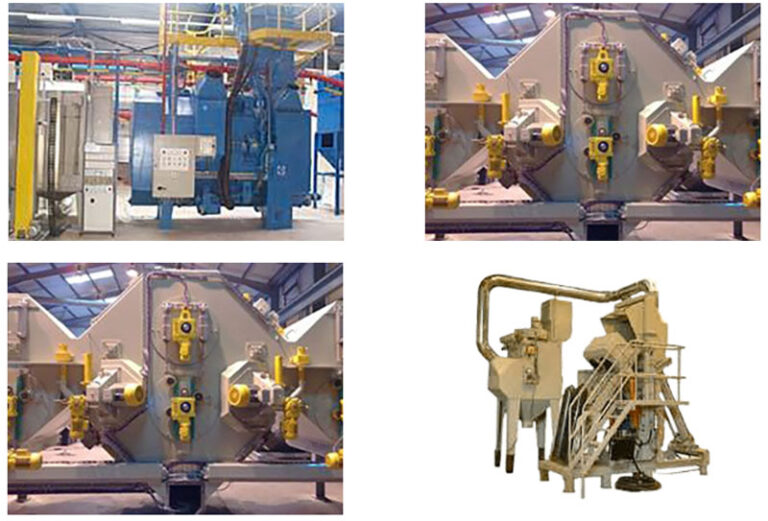
“The machine is powered by electricity and comprises
of a series of wheels connected by two chains that run
across them. A board is then mounted onto the chain,
offering a surface where the skin can be transported
to the various channels”.
“The automated process removes the wool from the skin
before the contents are deposited onto conveyers and
thereafter into separate bins. The only manual labour
that is required is the placement of the skin onto the
board and the emptying of bins. The rest of the
activity is completely automated,” says Werner with
pride.
Werner says that it would have been extremely time
consuming to work out the machine boards with the use
of a drawing board. “With AllyCAD, I was able to work
out the boards at various positions at exact angles
and could measure the distance between points. I found
that even fixed points with changing distances were
measured with ease and the software is user friendly
and produces accurate work”.
Over a three-month period, Werner had three to four
one-hour discussions with the client, produced the
drawings within a week and required a further week to
build the sample machine. |